

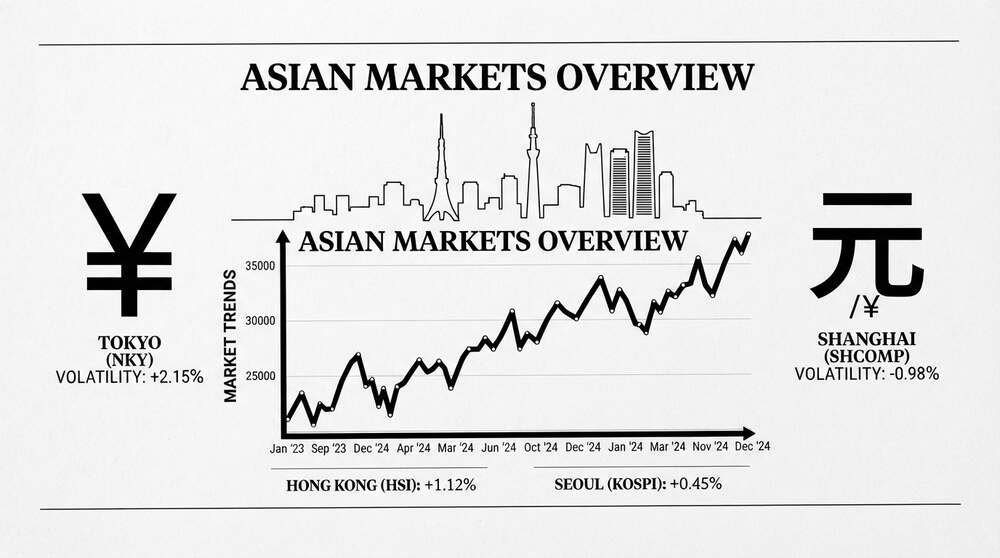
Asian stock markets are the first to open each trading day, setting the tone for global sentiment before European and U.S. exchanges come online. For investors searching for fintechzoom.com asian markets today, the goal is simple: get fast, accurate updates on index moves, currency shifts, and breaking news across Asia’s most important exchanges. From Tokyo to Hong Kong, Shanghai to Seoul, and Mumbai to Singapore, Asia is now a dominant force in global finance.
Whether you are a day trader watching the fintechzoom.com nikkei 225 ticker or a long-term investor tracking Chinese tech stocks, understanding what is happening in Asian markets today can give you a critical edge. Asian markets are influenced by a unique mix of domestic policy, currency fluctuations, commodity prices, and global trade flows. This article breaks down the key moves, trends, and drivers shaping Asian markets right now.
By the end of this guide, you will know how to interpret Asian index movements, why the Nikkei 225 matters, and how to use Fintechzoom as part of your daily research routine. Let’s dive in.
Why Asian Markets Matter to Global Investors
Asia is home to some of the world’s largest and fastest-growing economies, including China, Japan, India, South Korea, and the ASEAN nations. Together, these markets account for a significant share of global GDP and an even larger share of global manufacturing and trade. When Asian markets move, the effects ripple across the globe.
Here is why fintechzoom.com asian markets today data is essential for any serious investor:
- Early signal: Asian markets open hours before U.S. and European markets, providing an early read on global sentiment.
- Supply chain exposure: Asia dominates semiconductors, electronics, and manufacturing, so its markets reflect global supply chain health.
- Currency impact: The yen, yuan, and won are major reserve currencies, and their moves affect multinational earnings.
- Commodity demand: China and India are the world’s largest consumers of oil, metals, and agricultural products.
- Diversification: Asian equities offer exposure to growth markets that are not always correlated with U.S. stocks.
For traders, Asian markets also offer unique volatility windows. The Tokyo session, in particular, can see sharp moves in currency pairs and index futures that set the stage for the rest of the day.
Nikkei 225: The Pulse of Japan’s Economy
The Nikkei 225 is Japan’s most widely followed stock market index, comprising 225 large, publicly owned companies traded on the Tokyo Stock Exchange. When investors search for fintechzoom.com nikkei 225, they are typically looking for real-time index values, top movers, and news that affects Japanese equities.
Why the Nikkei 225 Matters
The Nikkei 225 is more than just a Japanese index — it is a barometer for the entire Asian region. Because Japan is the world’s third-largest economy and a major exporter of technology, automobiles, and machinery, the Nikkei reflects global demand trends. Key components include Sony, Toyota, SoftBank, and Fast Retailing (Uniqlo).
Several factors drive the Nikkei 225 on any given day:
- Yen exchange rate: A weaker yen tends to boost Japanese exporters, lifting the index.
- Bank of Japan policy: Interest rate decisions and yield curve control policies heavily influence the index.
- U.S. tech earnings: Japanese tech and semiconductor stocks often react to U.S. earnings reports.
- Global risk sentiment: The Nikkei is sensitive to geopolitical tensions and trade disputes.
- Domestic data: GDP, inflation, and retail sales figures from Japan can cause sharp moves.
Fintechzoom.com Nikkei 225 coverage includes pre-market futures, index components, and analyst commentary, making it easier to track Japan’s market in real time.
Key Asian Indices and Today’s Moves
While the Nikkei 225 is the most famous Asian index, it is far from the only one that matters. Here is a breakdown of the major Asian indices and what they represent:
| Index | Country/Region | Key Components | What It Signals |
|---|---|---|---|
| Nikkei 225 | Japan | Toyota, Sony, SoftBank | Japanese export strength and tech demand |
| Hang Seng | Hong Kong | Tencent, Alibaba, HSBC | Chinese tech and financial sector health |
| Shanghai Composite | China | Banks, industrials, tech | Mainland China economic momentum |
| KOSPI | South Korea | Samsung, SK Hynix | Semiconductor and export cycle |
| Sensex and Nifty 50 | India | Reliance, TCS, HDFC | Emerging market growth and domestic demand |
| Straits Times Index | Singapore | DBS, OCBC, SingTel | ASEAN financial and trade activity |
Today’s moves across these indices are often interconnected. For example, a sell-off in U.S. tech stocks can drag down the KOSPI and Nikkei the next morning. Similarly, a stimulus announcement from Beijing can lift the Hang Seng and Shanghai Composite while also boosting commodity-linked markets in Australia and Indonesia.
What’s Driving Asian Markets Today
Asian markets today are being shaped by a complex mix of global and regional factors. Here are the most important drivers right now:
1. U.S. Federal Reserve Policy
The Federal Reserve’s interest rate decisions have a direct impact on Asian markets. When U.S. rates rise, capital tends to flow out of emerging Asian markets and into dollar-denominated assets. When rates fall, Asian equities and currencies often rally. Investors tracking fintechzoom.com asian markets today pay close attention to Fed commentary and U.S. bond yields.
2. China’s Economic Data
China is the largest economy in Asia and the second-largest in the world. Its GDP growth, industrial production, retail sales, and property sector data all move Asian markets. Any stimulus measures from Beijing can trigger sharp rallies in the Hang Seng and Shanghai Composite.
3. Currency Movements
The Japanese yen, Chinese yuan, and South Korean won are all key currencies to watch. A weaker yen boosts Japanese exporters but can hurt neighboring economies. A stronger yuan signals confidence in China but may pressure Chinese export competitiveness.
4. Semiconductor Cycle
Asia dominates global semiconductor production. Taiwan, South Korea, and Japan are home to the world’s largest chipmakers. News about AI demand, chip shortages, or export restrictions can cause major moves in the KOSPI, Nikkei, and Taiwan Weighted Index.
5. Geopolitical Tensions
Trade disputes, territorial tensions, and regional conflicts can all impact Asian markets. Investors often move to safe-haven assets like gold or U.S. Treasuries during periods of heightened risk.
Key Takeaway: Asian markets today are driven by a combination of U.S. policy, Chinese data, currency moves, and the global tech cycle. Tracking these factors together gives you a complete picture.
Also Read: Fintechzoom.com US Markets Today: Stocks, Trends and News.
Sector Trends Across Asia
Different sectors are performing differently across Asian markets. Here are the key trends to watch:
Technology and Semiconductors
Tech remains the dominant sector in Asian markets, especially in South Korea, Taiwan, and Japan. AI-related demand has boosted chipmakers, while software and internet companies in China have shown mixed performance amid regulatory pressures.
Financials
Banks and insurance companies are heavily weighted in the Hang Seng, Straits Times Index, and Sensex. Rising interest rates generally benefit financials, while credit concerns can weigh on the sector.
Automotive and Manufacturing
Japanese automakers like Toyota and Honda are global leaders, and their performance affects the Nikkei 225. Electric vehicle competition from China and the U.S. is a growing theme.
Energy and Commodities
Asian markets are major consumers of oil, gas, and metals. Energy stocks in India, Indonesia, and Malaysia often move with global commodity prices.
Real Estate
China’s property sector remains a key risk factor. Any news about developer debt or government support can move the Hang Seng and Shanghai Composite significantly.
How to Track Asian Markets with Fintechzoom
Fintechzoom.com is a powerful tool for tracking Asian markets in real time. Here is how to use it effectively:
- Start with the index overview: Check the Nikkei 225, Hang Seng, and Shanghai Composite levels first. Note the percentage changes and volume.
- Review pre-market data: Asian markets open before U.S. markets close, so pre-market futures can give you an early signal.
- Monitor currency pairs: Watch USD/JPY, USD/CNY, and USD/KRW for clues about capital flows.
- Read breaking news: Scan headlines for central bank decisions, economic data releases, and geopolitical developments.
- Check sector performance: See which sectors are leading and lagging. This helps identify rotation trends.
- Use watchlists: Create a list of your favorite Asian stocks and indices for quick access.
- Combine with technical analysis: Use chart patterns and support/resistance levels to time entries and exits.
By incorporating Fintechzoom into your daily routine, you can stay ahead of Asian market moves and make more informed decisions. Remember that Asian markets can be volatile, so always use proper risk management.
Also Read: Fintechzoom.com Investments: Smart Ideas for Your Portfolio.
Frequently Asked Questions (FAQ)
Conclusion
Asian markets today are a critical part of the global financial landscape. From the fintechzoom.com nikkei 225 to the Hang Seng, Shanghai Composite, and Sensex, these indices reflect the economic pulse of the world’s fastest-growing region. By tracking index moves, currency shifts, and sector trends, investors can gain valuable insights that inform their global strategy.
Fintechzoom.com provides a powerful platform for monitoring Asian markets in real time. Whether you are a day trader looking for volatility or a long-term investor seeking diversification, the data and news available on Fintechzoom can help you make better decisions.
Stay updated, stay informed, and always do your own research. Asian markets never sleep — and neither should your market intelligence.
For more useful articles, visit my website: Fintechs-zoom.com.